
Nuevo registro de mortalidad por electrocución de Gallinazo Negro, Coragyps atratus en Ecuador
Text in English after Spanish
Este nuevo caso de electrocución se suma a los ya conocidos en Ecuador y pone el foco en una causa desconocida para las aves rapaces en el país andino. Si bien los datos aún son escasos, todo indica que para algunas especies, la electrocución puede ser una causa importante de mortalidad. La electrocución es un problema conocido en muchas regiones y las soluciones han llegado cuando la mortalidad afectaba ya a miles de ejemplares de numerosas especies, algunas ya en peligro de extinción por esta causa. Tomar medidas preventivas anticipadas y mejorar el servicio a los usuarios de la red sería crucial, ya que las electrocuciones, además de causar mortalidad, pueden provocar incendios y cortes del servicio.
Paul A. Molina
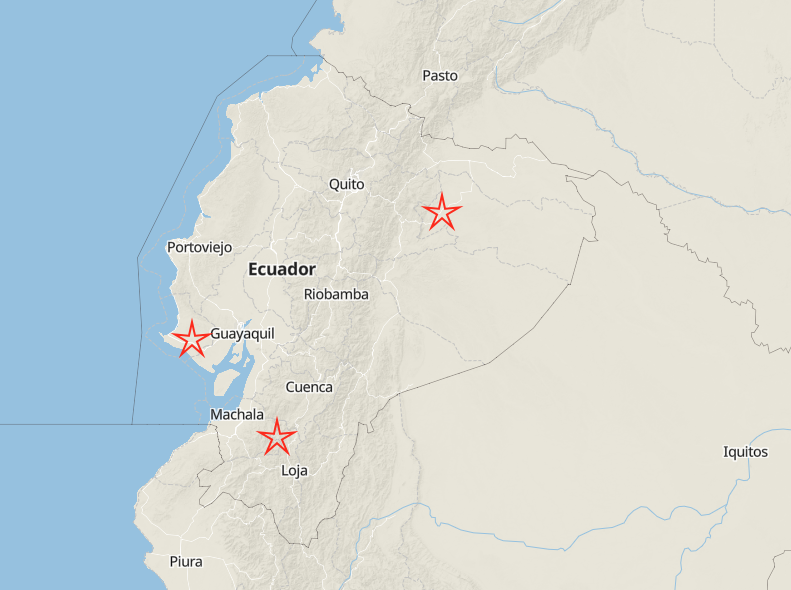
La mortalidad por electrocución es una causa importante para las aves rapaces a nivel global y afecta a muchas especies (Janns, 1999; Sánchez et al., 2020). En Ecuador, los casos reportados sobre electrocución de Gallinazo Negro (Coragyps atratus), son escasos. Existe el reporte de dos individuos electrocutados, uno en la costa y otro en la estribación oriental (Gallo F & Sánchez R, 2022).
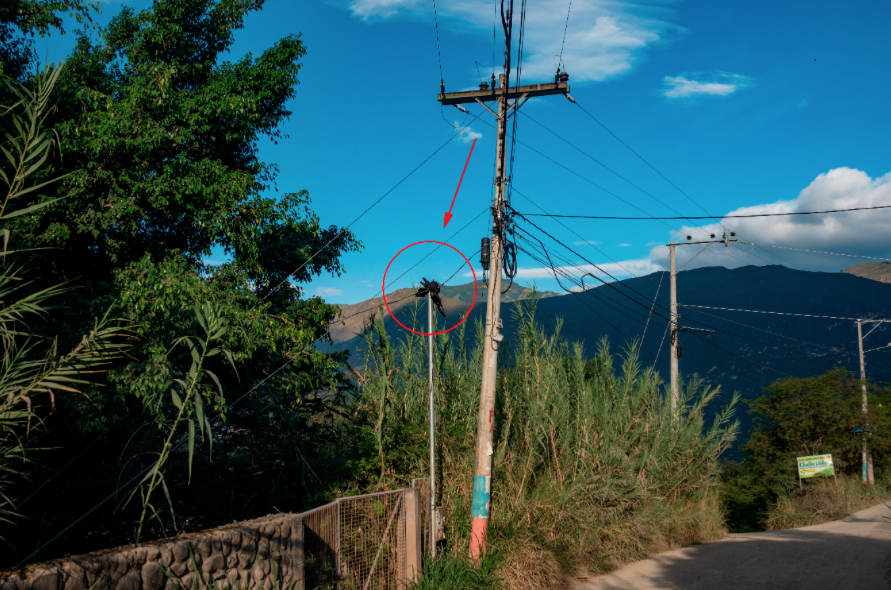
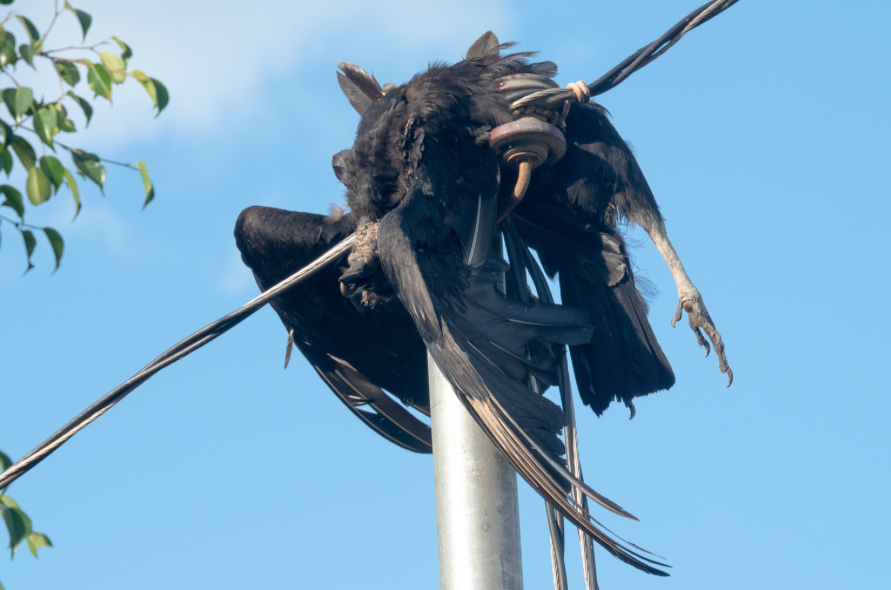
El 16 de julio de 2023, en Malapamba, Azuay (689905, 9637868 a 1295 m s.n.m), registré un individuo muerto de Gallinazo Negro (Coragyps atratus), que murió al posarse sobre un poste de una línea eléctrica a 10 metros de altura al borde de una carretera y al caer se quedó enganchado sobre otro poste por el que pasa el cable con funda aislante. En la figura 2 se aprecia en el plumaje una quemadura que posiblemente se haya producido al tocar el puente flojo rígido de la fase central y un cable lateral con la punta del ala contraria (Figura 1 & 2).
Es importante registrar estos eventos de mortalidad, ya que según (Gallo F & Sánchez R, 2022) al parecer son más frecuentes en Ecuador. Por lo tanto, se deben instalar protecciones en estos tendidos eléctricos con el fin de evitar este tipo de mortalidad (Sánchez, R, 2022). La zona pertenece a un bosque seco con árboles de Faique sp (Acacia) y especies introducidas. Allí, C. atratus es abundante y suele posarse en lugares bajos. Otras rapaces como el Águila Pechinegra (Geranoaetus melanoleucus) y el Gavilán Dorsirrojizo (Geranoaetus polyosoma) también han sido registradas en el sector y podrían verse afectadas por este tipo de mortalidad no natural. Este registro es nuevo para este año para esta especie en Ecuador, por lo que aparentemente es más frecuente en conexiones eléctricas con estas características. Es importante seguir reportando eventos similares y concienciar a la comunidad y a las autoridades para que tomen medidas beneficiosas para las aves rapaces en los diferentes lugares donde existan sistemas de transmisión eléctrica. Además, se podrían tomar medidas como las sugeridas por (Tintó et al., 2010), que sugieren la modificación de las estructuras donde las aves se posan.
New record of mortality by electrocution of Black Vulture Coragyps atratus in Ecuador
This new case of electrocution adds to those already known in Ecuador and puts the magnifying glass on an unknown cause for birds of prey in the Andean country. Although the data is still limited to a few cases, everything indicates that electrocution can be a significant cause of mortality for certain species. Electrocution is a recognized problem in many regions, and solutions have been implemented only after thousands of specimens of numerous species were already affected. Some of these species are already endangered due to this issue. Taking preventive measures would involve anticipating and improving the network’s service to users. In addition to mortality, electrocutions can also lead to forest fires and service outages.
By Paul A. Molina.
Electrocution mortality is an important cause of death for birds of prey globally and affects many species (Janns, 1999; Sánchez et al., 2020). In Ecuador, there have been few reported cases of electrocution of the Black Vulture (Coragyps atratus). There are reports of two individuals being electrocuted, one on the coast and the other on the eastern slope (Gallo F & Sánchez R, 2022). On July 16, 2023, in Malapamba, Azuay (689905, 9637868 at 1295 m a.s.l.), I observed a dead adult individual of the Black Vulture (Coragyps atratus). It died when it landed on a power line pole 10 meters above sea level. As it fell, it got stuck on another post, where a cable with a worn sheath passes. In Figure 2, a burn can be seen on the plumage that possibly occurred when it touched the loose rigid bridge of the central phase and a lateral wire with the tip of the opposite wing (Figure 1 & 2). Apparently, these incidents are more frequent in Ecuador, so measures must be taken to install protections on these power lines in order to prevent this type of mortality (Sánchez, R, 2022).
The area belongs to a dry forest with Faique sp (Acacia) trees and introduced species, where C. atratus is abundant and usually perches low. Other raptors such as the Black-chested Buzzard-Eagle (Geranoaetus melanoleucus) and the Variable Hawk (Geranoaetus polyosoma) have also been registered in the sector and could be affected by this type of unnatural mortality. This record is new for this year for this species in Ecuador, so apparently, it is more frequent in electrical connections with these characteristics. Therefore, it is important to continue reporting similar events and raise awareness among the community and authorities so that they apply measures that are beneficial for birds of prey in the different places where there are electrical transmission systems. Additionally, measures such as those suggested by (Tintó et al. 2010) could be taken, which suggests the modification of the structures where the birds perch.
Referencias Bibliográficas
Gallo & Sánchez. (2022). Primeros registros de mortalidad por electrocución de rapaces en Ecuador. Eagle News, Ecología y Conservación de las Rapaces, entrada 82.
Janss, G. F., & Ferrer, M (1999). Mitigation of raptor electrocution on steel power poles. Wildlife Society Bulletin, 263-273.
Lehman, R. N., Kennedy, P. L., and Savidge, J. A. (2007). “The state of the art in raptor electrocution research: A global review”. Biological Conservation, 135, 459–474.
Sánchez, R., Sánchez, J., Oria, J., & Guil, F. (2020). Do supplemental perches influence electrocution risk for diurnal raptors?. Avian Research, 11(1), NA-NA.
Sánchez, R. (2022). Eficacia de los elementos disuasorios de posada en torretas eléctricas; ¿reducen la mortalidad por electrocución en las rapaces? Eagle News, Ecología y Conservación de las Rapaces, entrada 84.
Tintó, A., Real, J., & Mañosa, S. (2010). Predicting and correcting electrocution of birds in Mediterranean areas. The Journal of Wildlife Management, 74(8), 1852-1862.
Comparte esto:


 Eagles News
1 Comentario »